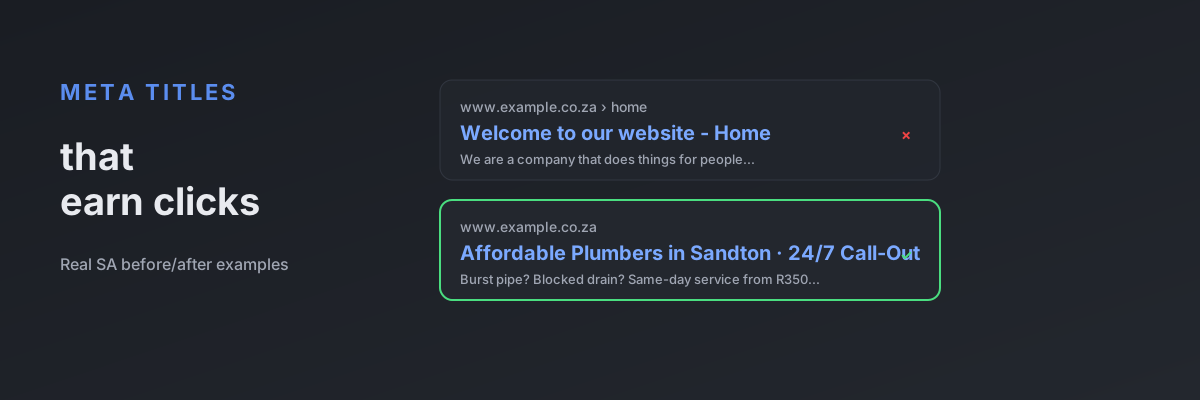
Your meta title is one of two things a Google searcher sees before they decide whether to click your result. The other is the meta description. Of the two, the title carries more weight, both for rankings and for click-through rate. Most South African business sites still use the default title their CMS generated five years ago. That is a meaningful chunk of free traffic going to whoever wrote a better title.
This is not about keyword stuffing. Google has been demoting keyword-stuffed titles since 2012. What works in 2026 is straightforward: write a title that tells the searcher exactly what they will get if they click, and includes the words they actually used.
The pattern that works
Almost every good meta title fits one of these shapes:
- [What you offer] in [Where you offer it] - "Plumbers in Pretoria East"
- [Specific keyword] · [Trust signal or differentiator] - "Tax Returns for Freelancers · Registered SA Practitioners"
- [Number] [thing] [outcome] - "12 SEO Checks Before You Spend on Ads"
- [Question they asked] - "How much does a website cost in South Africa?"
Each one tells the searcher what is on the page in the first three or four words. Each one includes the keyword the user actually typed. None of them include the word "Welcome".
Before and after
SA plumbing business
Before: "Home - Quick-Fix Plumbing Solutions (Pty) Ltd"
After: "Plumbers in Sandton · Same-Day Call-Out from R350"
The "after" version answers location, urgency, and price. Searchers looking for a plumber in Sandton with a burst pipe at 8pm are not searching for "Quick-Fix Plumbing Solutions". They are searching for "plumber Sandton". The title needs to match the search.
Cape Town accounting firm
Before: "About Us | Smit & Associates"
After: "Tax Returns for SA Small Businesses · Cape Town Accountants"
"About Us" is a navigation label, not a search query. The "after" version targets a specific service for a specific market, with location for local SEO. The firm name still appears on the page itself, just not at the front of the title where it competes for screen space.
Johannesburg coffee shop
Before: "Beans & Brew Coffee - Welcome to Our Coffee Shop"
After: "Specialty Coffee in Rosebank · Roastery & Cafe"
People searching for "coffee shop Rosebank" are not searching for "Beans & Brew" - they discover the name after they click. The title's job is to win the click in the search results, then the homepage does the rest.
Rules of thumb
- Under 60 characters. Anything longer gets truncated in Google results with a "...". Test on Google's SERP simulator or check what your existing pages look like in a real search.
- Front-load the keyword. The first three or four words carry the most weight, both for ranking and for the eye scanning a results page.
- Make every page unique. Duplicate titles confuse Google and waste opportunities. WordPress with Yoast or Rank Math shows you which pages share titles. Fix those first.
- Skip the brand prefix on most pages. "Brand Name | Specific Service" wastes the high-value start of the title on a brand most searchers do not know yet. Lead with the service. The brand can sit at the end if you have characters to spare.
- Numbers and specifics outperform vague claims. "From R350" beats "Affordable". "Same-Day" beats "Fast". "12 Checks" beats "Comprehensive Audit".
How to check yours
Open Google Search Console (free, every site should have it). Go to Performance, then Pages. Sort by clicks descending. For each of your top 20 pages, search the page URL on Google in an incognito window and look at the result. Is the title doing its job? Would you click it? Rewrite the weakest five this week, then check the click-through rate in Search Console two weeks later. Small wording changes routinely lift CTR by 20 to 40 percent.
The free scan reports every page's title, length, and duplicates. It also flags pages where the title is missing entirely or just contains the site name. Fix those first - they are usually one-line wins in your CMS. For a closer look at how page titles roll up into a full site report, see the good score sample. For the broader on-page checklist, see the SA SMB SEO checklist.